It had been one of the most beautiful days in my recent memory, one of those crystal-clear, blue-sky days we recall from our childhood. The patio was pristine, ready for the season of patio happy hours and barbecues, where neighbors wandered in and out, and the pool right across the drive had just opened. The weather report sucked—two days of rain ahead, but we had an entire six months of outdoor living to look forward to. It was going to be a banner summer.
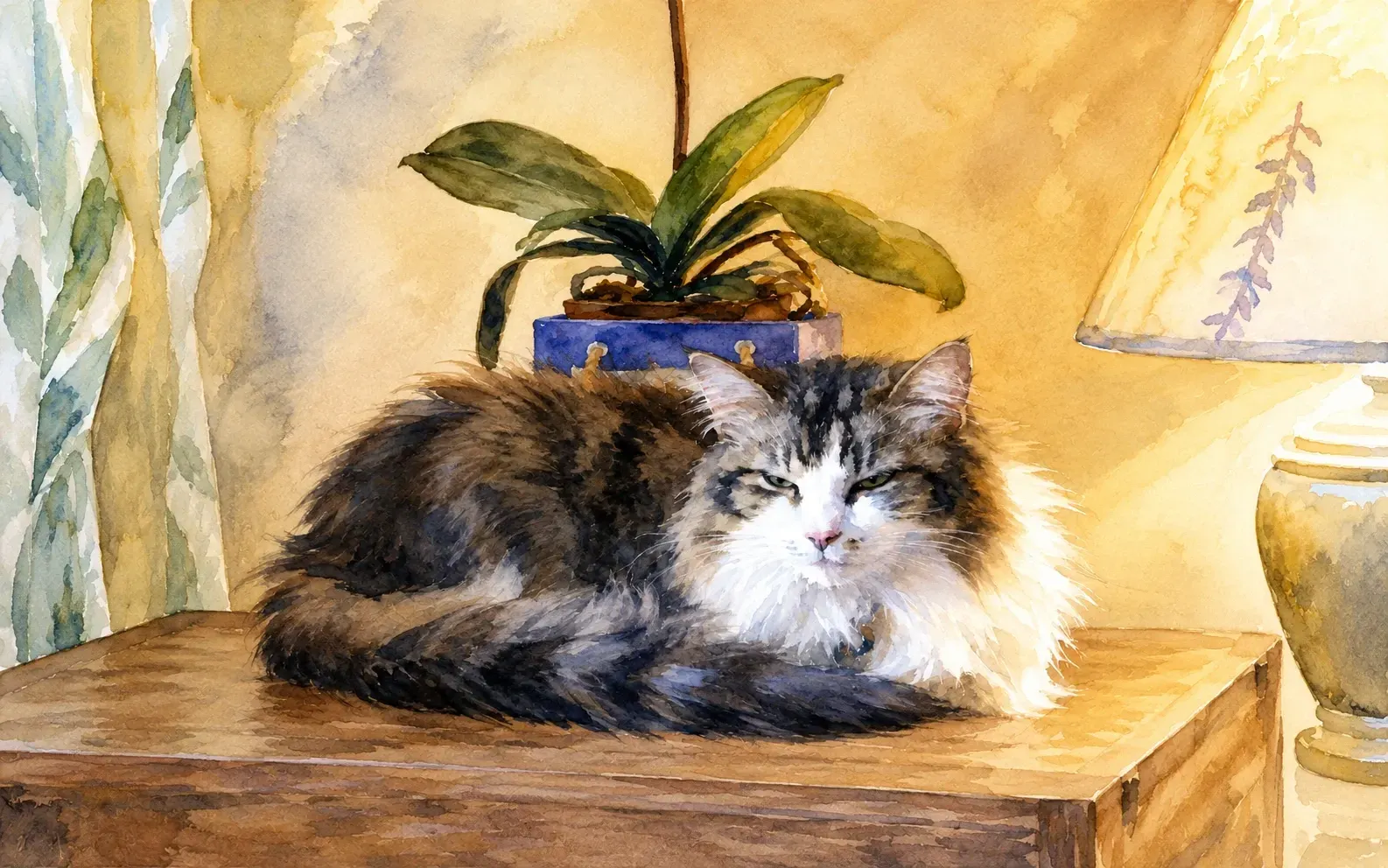
After an entire afternoon outdoors, I settled in for the evening. I stretched out in the den, my feet planted on the top of the couch, while Miss Fluff, my gorgeous Norwegian forest cat, was perched firmly next to them. We both watched TV as my mind wandered. I marveled at her recovery from a two-month near-death episode. I had nursed her through that time, and now she was back, back in all her glory. Finally, all was right with the world!
“Where’s my cat? WHERE’S MISS FLUFF!” Those were the first words out of my mouth as I struggled aboard the canoe that rescued me from the grips of Nashville’s Thousand-Year Flood and took me to safety early the next morning, May 2, 2010. Moments before, I had dropped Miss Fluff from the second story of my condo to the waiting arms of one of my rescuers. I held her close, kissed her goodbye, and told her I’d see her on the other side.
The Water
I barely had time to move my three cats to safety on the second floor before the water started pouring in through my front and back doors. My front door is a few feet from the retaining pond that catches the overflow from the Harpeth River, so mine was one of the first condos to flood. It wasn’t long before the first puddles of water appeared, just as I was heading back upstairs with litter boxes, food, and water for the cats. By the time I got the cats settled, the trickle of water had turned into an avalanche and was making its way up the staircase. The flickers of light had extinguished into an eerie darkness as the electricity gave in to the rising floodwater.
I made one more quick trip downstairs and ran around like a crazy woman, unplugging everything in sight. (Why didn’t I think to flip the circuit breakers?) I gave passing thought to the irony of unplugging the washer in the middle of the spin cycle. I grabbed a few documents from the safe before hightailing it back upstairs to relative safety, or at least to dry land.
Then panic gripped me. My only thought was about survival and how to accomplish it. I called a neighbor from my cell phone and asked her if we were going to die.
“No,” she replied.
With that settled, I turned my attention to finding someone to rescue us. I opened the window, and ducking in and out between lightning strikes, I waved frantically and yelled, “Hello? HELLO!”
Within a few minutes, and what felt like hours, a voice answered back, “We’re here to rescue you.”
“Oh my GOD! I don’t know who you people are, but you must be angels sent from God. You have to save my cats,” I answered. “I have three.”
“We can only take one,” replied the woman. “Throw the cat, and I’ll catch it.”
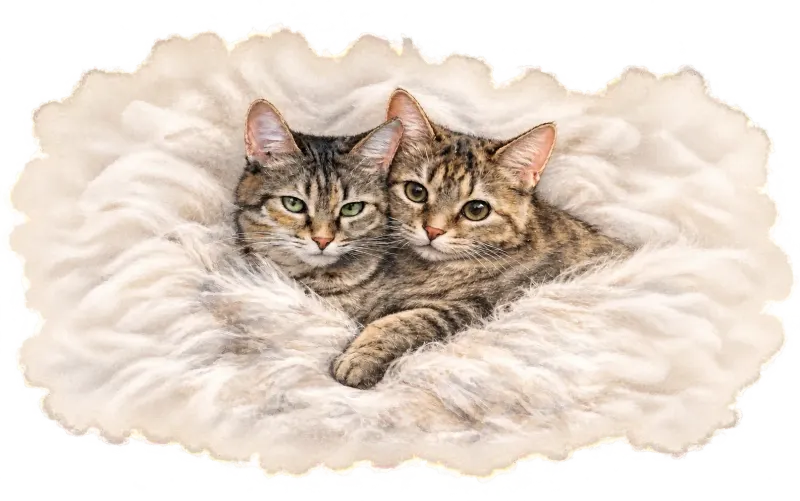
I knew immediately that the two young sister kittens, Fifi and Fiona, would have the best chance of surviving in place, so I reluctantly chose to leave them behind. My older Norwegian forest cat had won the lottery—she would make it to safety that day, and I’d pray for the best for the little ones.
“Are you sure you’ll catch her? I don’t want her to drown.”
“We do this all the time. Just throw her down.”
The Rescue
I grabbed Miss Fluff and threw her to the woman, who actually caught her.
“Now it’s your turn,” the man commanded.
“Are you CRAZY? You want me to jump from up here?”
“We get that a lot. Trust me, we do this all the time,” said the woman.
Trust her? To catch me as I rocket into a canoe from the second floor? “Well, you’re not doing it with me,” I said.
“Then you’ll have to go downstairs and swim out to the canoe.”
“No problem,” I yelled as I darted for the stairs, feeling like a traitor leaving the girlie girls behind and wondering just who in their right mind would jump. When I got downstairs, I found neck-deep water already sloshing through the lower level and still creeping up. Fortunately, I didn’t stop to think what might be in that water.
My wet jeans weighed me down, but I managed to make it into the office, where I flung open the window, wrestled with the screen, wondered for a split second what to do with the screen, and then tossed it out into the water. I floated up to the windowsill, fought against water rushing in through the open window, and swam a few feet to the canoe, where the two rescuers hoisted me to safety. I didn’t think twice about swimming in the midst of an electrical storm until I was inside the canoe.
“Where’s my cat? WHERE’S MISS FLUFF?” I pleaded as I looked around for Miss Fluff when I fell into the canoe. “We have to find her!”
“I don’t know. We have too many other people to rescue to stop and look for her, and we have to get you back to land before the lightning gets any closer,” said the woman.
Even as I sobbed, I knew the rescuers had plenty of work ahead of them to bring the remaining residents to safety, and of course, they didn’t have time to look for a cat. I got that. I’m a former TWA flight attendant, where “safety first” was our version of “Semper Fi.”
I realized immediately that the woman had let go of Miss Fluff to help me into the canoe, something I probably could not have done alone without capsizing it. In retrospect, I know that instinct would have driven me to do the exact same thing. It’s a rescuer’s instinct, and that instinct saves lives.
As we approached the main road and the man helped me out of the canoe, I turned to him and thanked him for saving my life. I was in such a state of shock at the time that I didn’t fully comprehend the magnitude of his kind and heroic act until later. Almost as an afterthought, I asked, “What now?”
What Now?
“What now? I don’t know,” my rescuer said. “We have people to rescue, and you’re safe now. Just make your way to the main road, and you’ll figure it out.”
As I walked a few feet to the main road, I knew he was right. I was safe—and alone, more alone than I’d ever been in my life. That was just one of the many thoughts darting through my head like greased lightning.
After crossing the street, I turned back and looked toward the condo. I couldn’t see it because the condos on the main road blocked the view, but I could see that most of our section was under many feet of water. As the water rushed down the road, I remember thinking, “So, that’s what ‘flash flood’ means!”
Cell phone service was spotty, but I managed to get a few calls through to my brother and friends to let them know I had been rescued. Fighting back sobs, the tone of those calls was harried and terse because I knew I could lose the connection at any moment.
I took stock. No home. No Miss Fluff. Two kittens whose fate I wouldn’t know for hours. Almost everything I owned was underwater—literally. I had my purse, my cell phone, my Passport Drive, and the clothes on my back.
And I knew exactly what to do next.
Not because I had a plan. I didn’t. But TWA had drilled something into me years before that doesn’t show up on a résumé or a checklist: the instinct to move before you’re ready, to read the situation for what it is—not what you wish it were—and to take the next step anyway.
You figure it out. That’s not optimism. That’s the only move there is.
The war was just getting started.